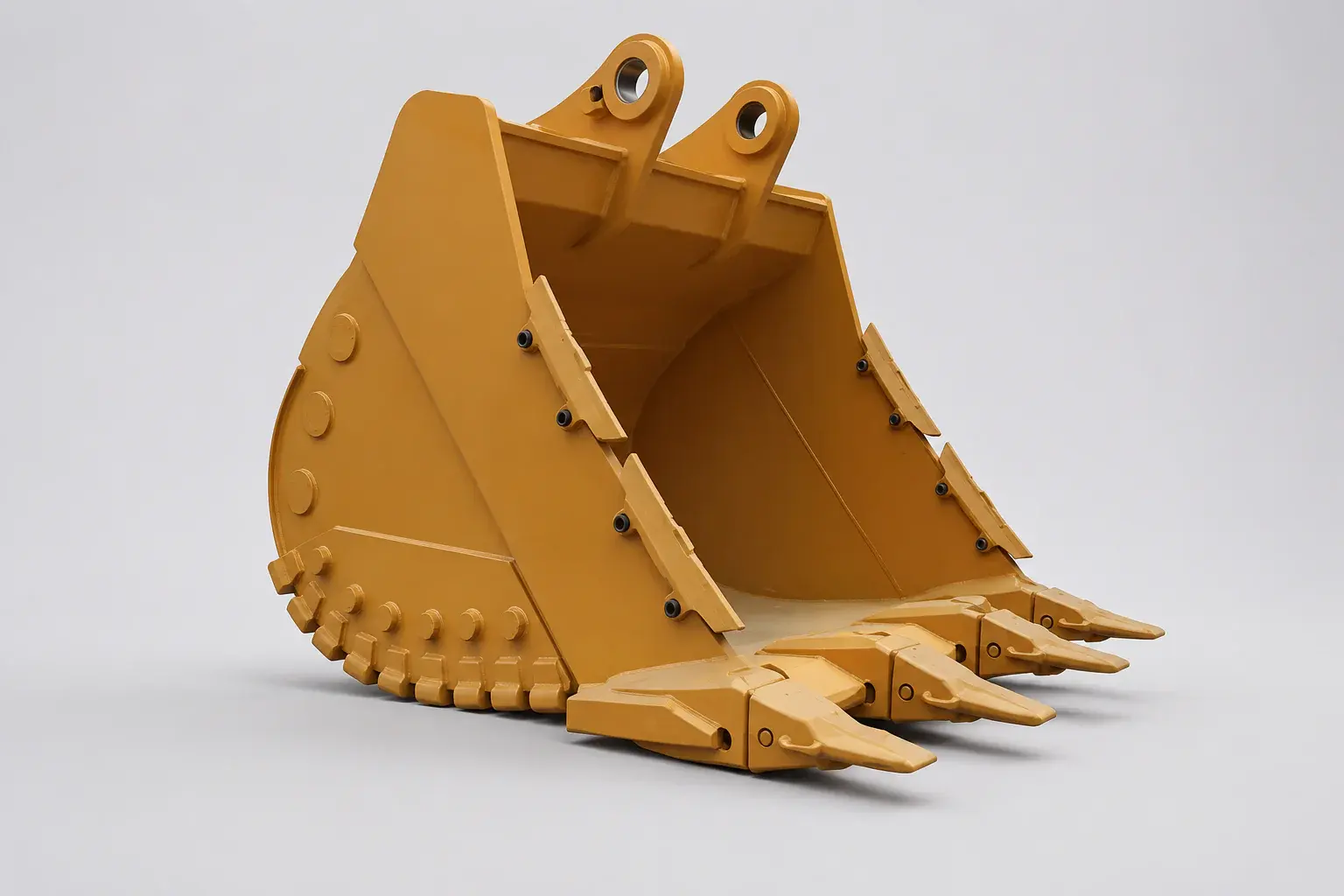
Bucket capacity matters, but it cannot be separated from material density, digging resistance, carrier stability and the required finished profile.
CONCEPT COMPARISON
| Bucket type | Starting application | Primary checks |
|---|---|---|
| Earthwork bucket | Loose soil, sand and clay | Capacity, fill behavior, cycle target and carrier lift envelope |
| Rock bucket | Hard soil, rubble and gravel | Penetration, cutting edge, side and bottom wear protection |
| Mining bucket | Hard stone, weathered rock and blasted ore | Impact load, structural reinforcement, abrasion and replaceable wear parts |
| Skeleton or screening bucket | Coarse separation, topsoil and aggregate recovery | Grid or screen opening, moisture, oversize and hydraulic demand where powered |
| Ditch-cleaning or grading bucket | Drainage, slopes and finish grading | Width, edge, tilt requirement, filled weight and finished profile |
| Trapezoidal or U-ditch bucket | Repeatable shaped trenches and channels | Finished dimensions, radius or side angle, soil and machine geometry |
Compare bucket offers on the same basis
Ask each supplier to state bucket width, capacity basis, empty mass and the included tooth, edge and wear package. Compare the same configuration: extra reinforcement may increase empty mass, while a different cutting edge can change the finished width.
Use the carrier manufacturer’s attachment limits and load information for the actual operating configuration. Nominal excavator tonnage or a bucket volume alone cannot establish an acceptable loaded combination.
- Identify the material and expected moisture condition
- Record the coupler or direct-pin interface and attachment mass
- Keep capacity basis, wear parts and replacement references with the quote
Match the profile to the material
Loose material rewards capacity and easy filling. Rock and compacted ground place more emphasis on penetration, structure and wear protection. Finish work needs a clean, controllable edge.
- Earthwork bucket for loose material
- Rock or mining bucket for severe duty
- Skeleton or screening bucket for separation
- Grading, ditch or shaped bucket for finished geometry
Set width and capacity together
A wider bucket changes breakout behavior, fill weight and side loading. Evaluate the actual material density and machine lift envelope before increasing nominal capacity.
- Carrier operating weight
- Material density and moisture
- Desired trench or grading width
- Cycle time and loading height
Plan replaceable wear components
Teeth, adapters, cutting edges, side cutters and wear liners should be accessible and appropriate for the local service environment.
- Tooth and adapter system
- Bolt-on or welded cutting edge
- Side protection
- Bottom and heel wear strips
COMMON BUYER QUESTIONS
What are the main types of excavator buckets?
Common starting types include earthwork buckets for loose material, rock and mining buckets for severe digging, skeleton or screening buckets for separation, ditch-cleaning and grading buckets for finish work, and trapezoidal or U-ditch buckets for shaped channels.
How do I choose the right excavator bucket size?
Define the required width or finished profile, estimate filled weight from actual material density, and check the carrier lift envelope, breakout behavior, stability and interface. Nominal machine weight or bucket capacity alone does not prove a safe, productive match.
What is the difference between an earthwork, rock and mining bucket?
An earthwork bucket emphasizes capacity and filling in loose material. A rock bucket adds penetration and wear protection for hard soil, rubble and gravel. A mining bucket uses more reinforcement and wear protection for high-impact, abrasive rock and ore duty.
What measurements are needed for an excavator bucket quote?
Provide the carrier make, model and operating weight, both pin diameters, pin center distance, dipper width or coupler pickup, material type and density, required width or capacity, duty cycle, wear expectations and destination.