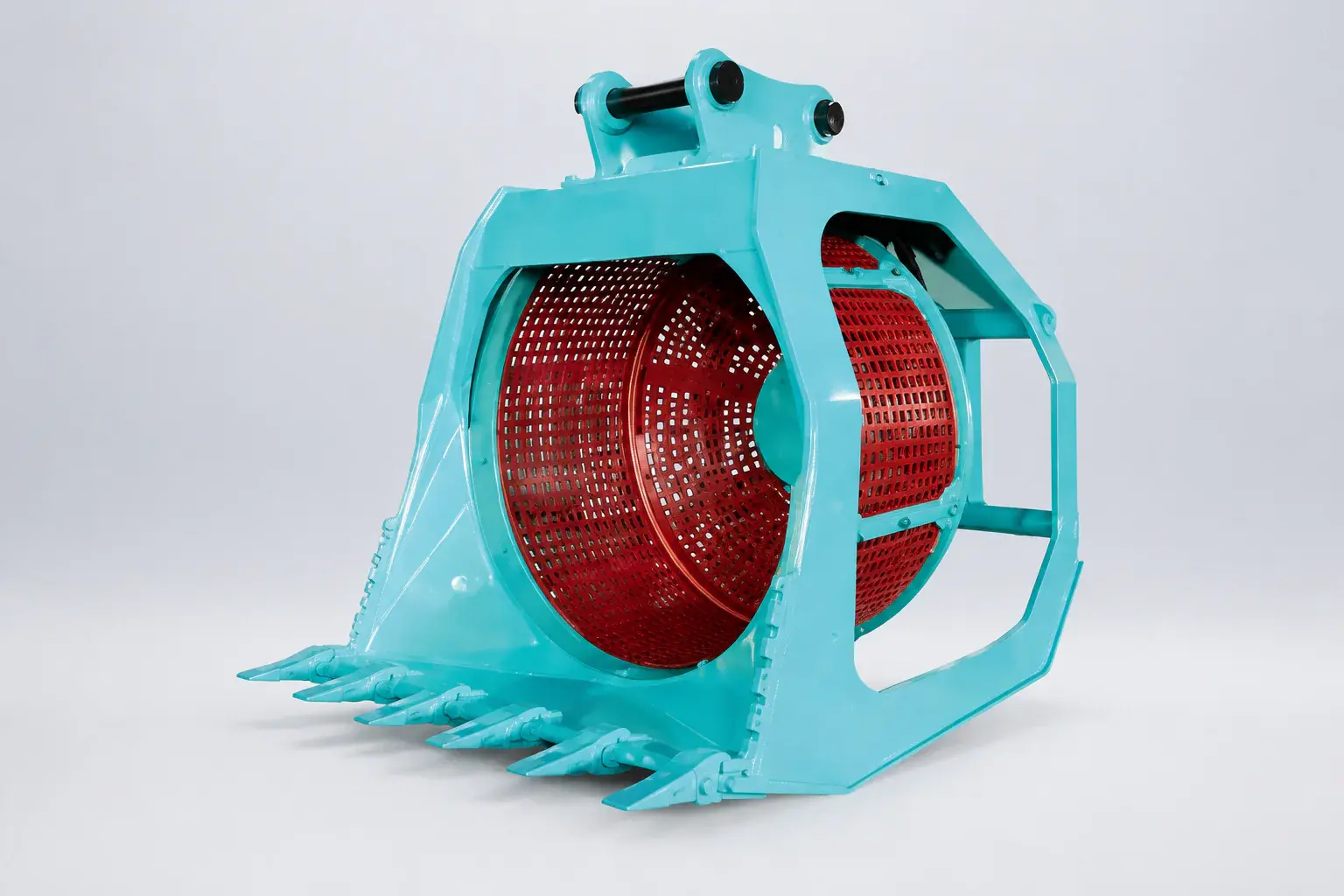
A topsoil screening bucket can process material where it is excavated, but the best configuration depends on what must pass through the screen and what must remain. Start with the worst expected material condition, not a clean dry sample.
Define the finished topsoil fraction
Specify the largest acceptable particle in the finished material and identify roots, stone, demolition fragments or organics that must be retained. A finer opening can improve finish but may reduce throughput or clog sooner.
- Target screen opening
- Maximum incoming fragment size
- Root and debris content
- Acceptable oversize fraction
Account for moisture and clay
Dry, loose topsoil normally separates more easily than wet or clay-rich material. Sticky feed can bridge across openings, so screen style, opening size and operating method must be reviewed around the actual moisture range.
- Dry, damp or saturated condition
- Clay and organic content
- Expected seasonal variation
- Clean-out and maintenance access
Match the bucket to the excavator
Confirm operating weight, lift capacity, coupler geometry and usable hydraulic flow and pressure. The PINSHENG rotary screening bucket range is published for 12–36 tonne excavators, 80–160 L/min flow and interchangeable 10–150 mm screens.
- Carrier make, model and operating weight
- Auxiliary flow and relief pressure
- Coupler and pin geometry
- Attachment weight and stability
Set a realistic production brief
Daily output depends on feed preparation, moisture, screen opening, bucket fill and operator cycle. Share a material photo or sample description and the required finished volume before asking for a configuration.
- Target volume per hour or shift
- Loading and discharge arrangement
- Feed preparation method
- Required screen changes
COMMON BUYER QUESTIONS
What screening bucket is best for topsoil?
A rotary screening bucket is useful when the job needs active agitation and selectable screen openings. A fixed skeleton bucket can be enough for coarse separation of larger stone and debris.
Can a screening bucket process wet topsoil?
It can process some damp material, but sticky clay and saturated soil may blind the screen and reduce throughput. Material moisture, clay content and target opening should be tested or described before selection.
What information is needed to quote a topsoil screening bucket?
Provide the excavator model and weight, auxiliary flow and pressure, coupler details, target screen size, incoming material condition, largest fragments and required daily output.