 01
01
Break · dig · load
Mining & Quarry
Mining and quarry attachments: reinforced buckets and ground-engagement tools for abrasive, high-impact and blasted material.
View recommended attachmentsWorking outcome
Balance penetration, structural reinforcement and wear life around the actual rock and duty cycle.
Typical conditions
- Weathered and blasted rock
- Quarry face cleanup
- Severe-duty loading
- High-abrasion material
Data to confirm
- Rock type, density and fragment size
- Cycles and hours per shift
- Carrier breakout force
- Preferred wear plate and replaceable protection
Quick answer
SELECT THE TOOL BY WORK STAGE.
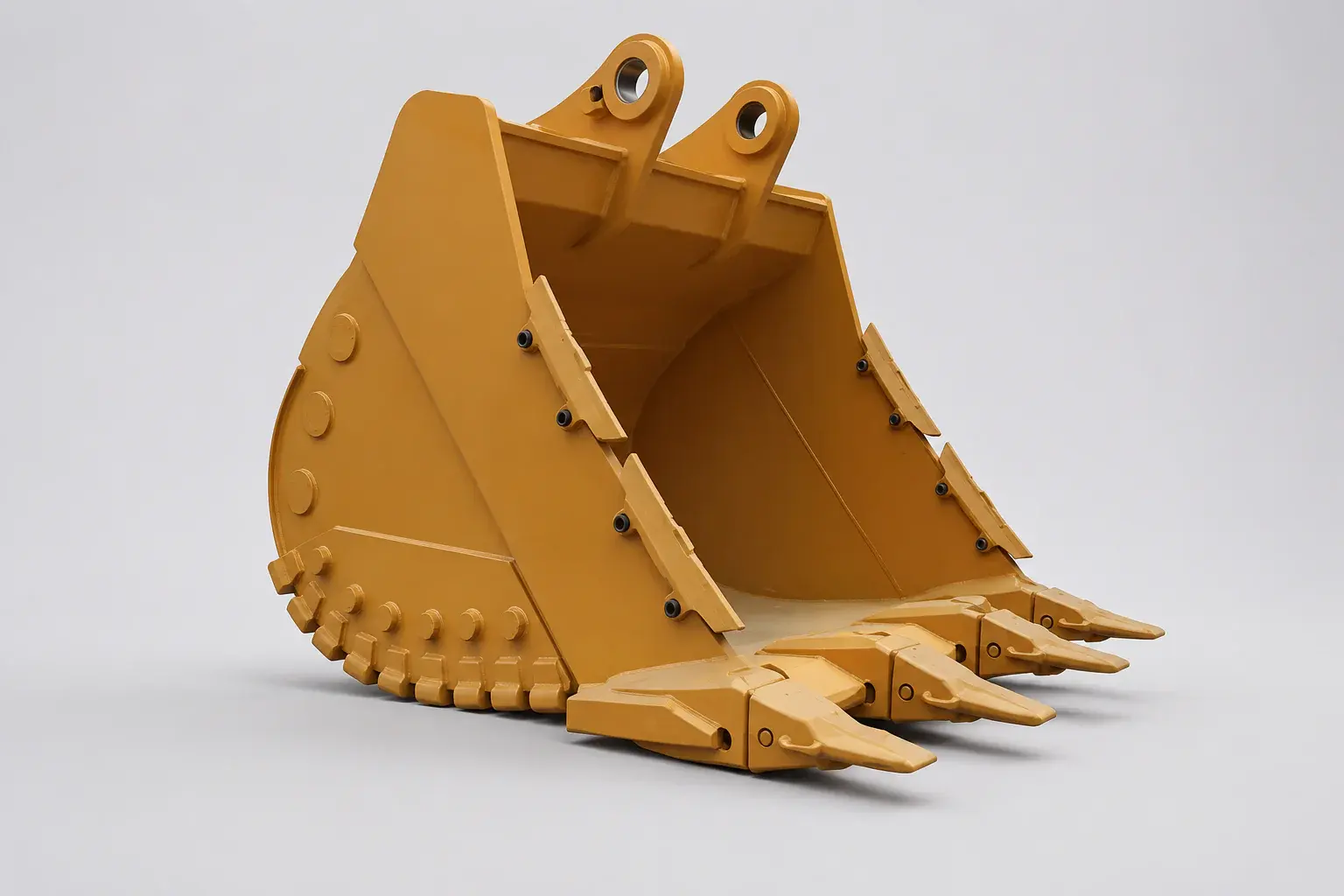
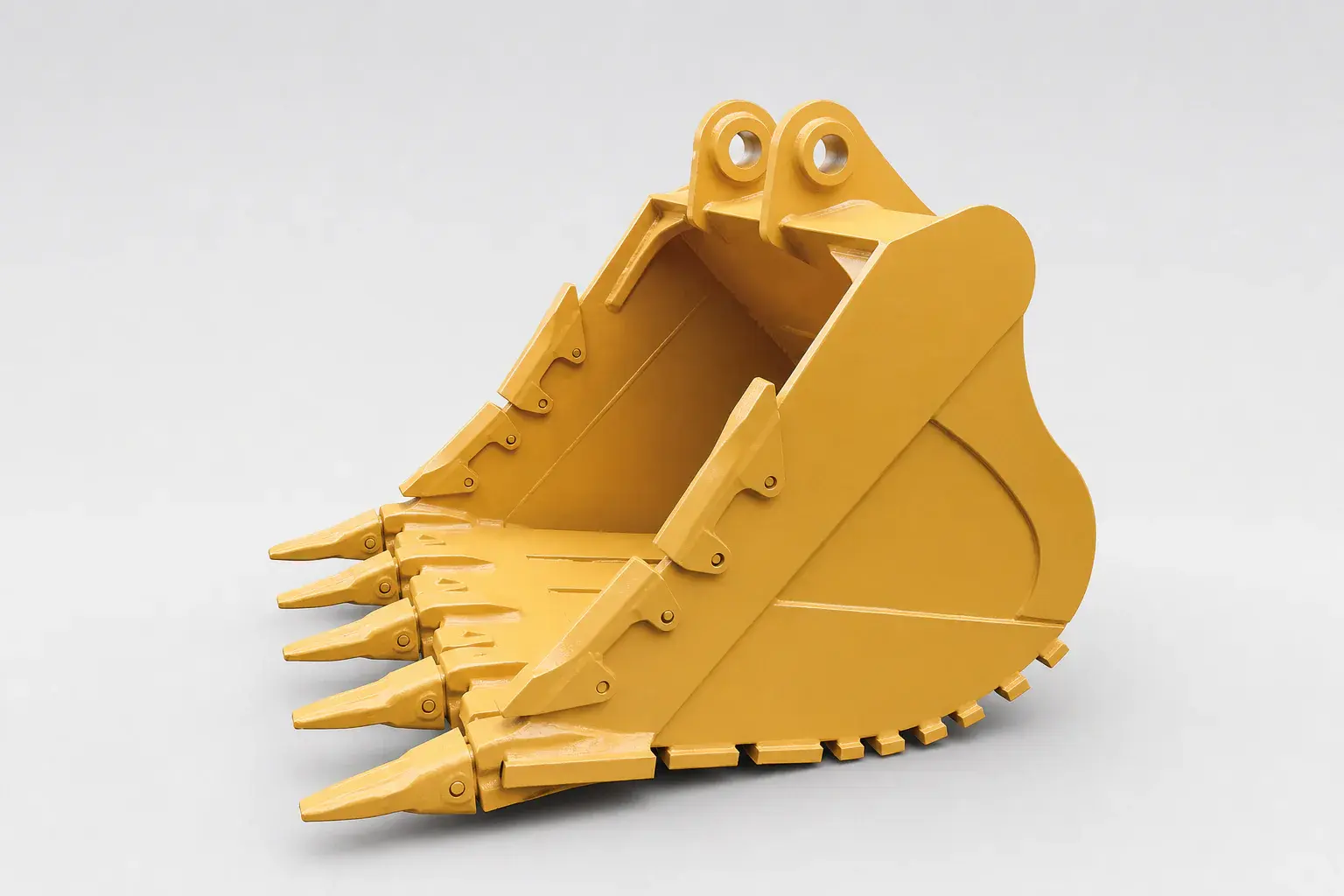
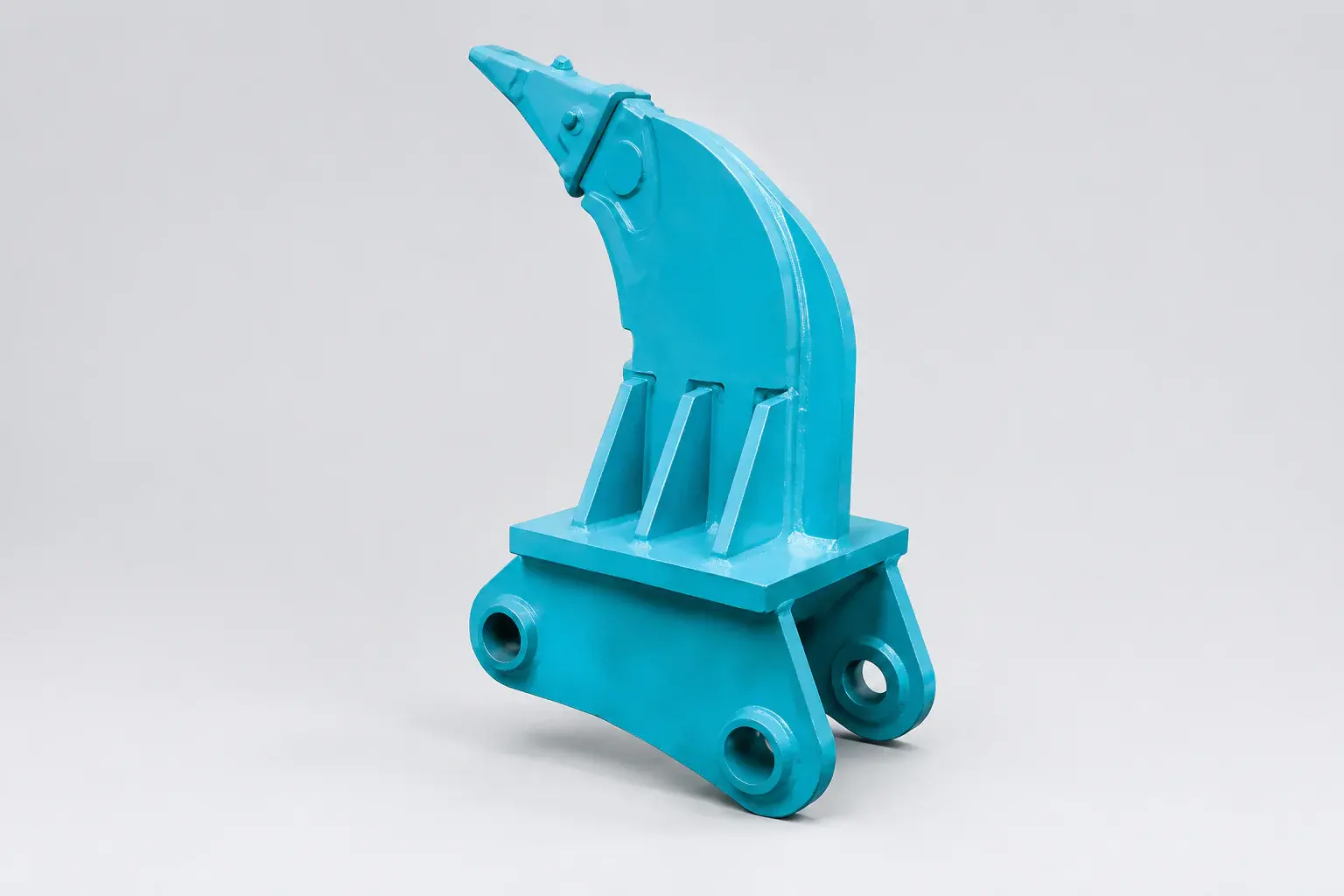
Select mining attachments and quarry attachments by material and duty cycle. Start with a mining bucket for hard stone, weathered rock and blasted ore, a rock bucket for hard soil, rubble and gravel, or a single-tooth ripper to loosen compacted or weathered ground before loading. Review bucket reinforcement and wear protection for abrasion and impact alongside the carrier interface. Confirm the excavator model, operating weight, pin geometry and breakout force, then share cycles and hours per shift before setting bucket capacity or the wear system.
01
Classify the material
Rock type, density, fragment size, abrasion and impact determine the starting bucket and wear basis.
02
Set the machine match
Confirm excavator model, operating weight, pin dimensions, dipper width and breakout force before fixing width or capacity.
03
Plan the duty cycle
Cycles and hours per shift, loading pattern and expected wear guide reinforcement, replaceable protection and service expectations.
04
Loosen before loading
For compacted or weathered ground, review penetration and carrier force before using a bucket for the loading pass.
Recommended starting points
Attachments for Mining & Quarry
These products narrow the starting range. Final geometry, wear system and hydraulics are confirmed against the machine and job.
Application questions
DIRECT ANSWERS FOR A BUILDABLE WORKFLOW.
Which material is a mining excavator bucket intended to handle?
The published basis is hard stone, weathered rock and blasted ore in quarrying, mining and severe-duty loading. Describe density, fragment size, abrasion and impact so reinforcement and wear protection can be reviewed for the actual material.
What excavator information is needed before selecting a mining bucket?
Provide the carrier make, model and operating weight, pin diameter, pin centers, dipper width and breakout force. Bucket width, capacity and mounting geometry are confirmed against the exact machine before production.
How do cycles and hours per shift affect the mining bucket configuration?
Cycles and hours per shift establish the working duty and expected wear exposure. Share the loading pattern and service interval together with the material so the reinforcement, wear plate and replaceable protection can be selected without assuming a universal service life.
Should a quarry use a mining bucket or a rock bucket?
Use the material and duty as the starting point: the mining bucket is listed for hard stone, weathered rock and blasted ore, while the rock bucket is listed for hard soil, rubble and gravel. Fragment size, abrasion, impact, carrier force and cycle time still need model-specific review.
Application review
SEND THE MACHINE.
DEFINE THE WORK.
Requesta match↗